Rights, Responsibilities & Etiquette
Under the Americans with Disabilities Act (ADA), service dogs are generally permitted to accompany their owners in places where members of the public are allowed.
Service dog access comes with responsibilities for both owners and businesses to help ensure safe and respectful public environments.
When it is not obvious that a dog is a service animal :
1. Is the dog required because of a disability?
2. What work or task has the dog been trained to perform?
Businesses may not:
No.
The ADA does not require service dogs to be registered, certified, or listed in a national database.
No.
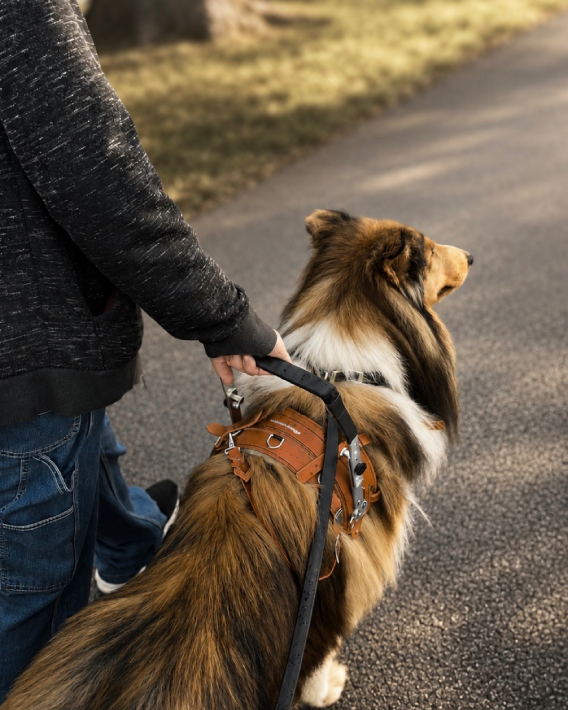
The ADA does not require service dogs to wear a vest, harness, or any specific identification.
Many owners choose to use identifying equipment, but it is not required by law.
A service dog may be excluded if:
The dog is out of control and the owner does not take effective action to regain control.
The dog is not housebroken.
A service dog may not be excluded simply because someone is uncomfortable around dogs or because of fear or allergies.
Service dogs are working animals, and respectful interactions help teams succeed.
When encountering a working service dog:
Do not pet or distract the dog without permission.
Avoid calling to or engaging with the dog while it is working.
Speak with the owner rather than addressing the dog.
Respect the owner’s privacy.
Allow the team appropriate space to navigate their environment.
Under the Americans with Disabilities Act (ADA), service dogs are generally permitted to accompany their owners in places where members of the public are allowed.
Service dog access comes with responsibilities for both owners and businesses to help ensure safe and respectful public environments.
False.
The ADA does not require service dogs to be registered or certified.
False.
Service work requires appropriate temperament, health, confidence, and training suitability.
False.
When the need for a service dog is not obvious, businesses are generally limited to the two legally permitted questions.
False.
Emotional support animals and service dogs serve different roles and have different legal protections.
False.
Identification equipment is optional under the ADA.